
Sabine County Marriage Records
Sabine County marriage records are kept by the County Clerk in Hemphill, Texas. If you need to find a marriage license, get a certified copy, or check on a record from years past, the County Clerk is the right office to contact. Records go back to 1880, giving researchers and families access to a long history of marriages filed in this East Texas county.
Sabine County Overview
Sabine County Clerk Office
The Sabine County Clerk handles all marriage license applications and maintains records on file in Hemphill. The office is run by County Clerk Jamie Clark. You go here to apply for a new license, get a certified copy of an existing record, or search for a past marriage. All requests must come to this office directly since the state does not issue certified copies.
The office keeps records going back to 1880. Note that a fire destroyed many pre-1875 records, so anything from that period may not be available. If you are doing genealogy research, contact the clerk's office to ask about what records survived and what alternatives exist. Staff can point you to other resources when gaps exist in the files.
| Office | Sabine County Clerk |
|---|---|
| Clerk | Jamie Clark |
| Address | 280 Main Street Suite 100 Hemphill, TX 75948 |
| Phone | (409) 787-3786 |
| Fax | (409) 220-8353 |
| Hours | Monday through Friday, 8:00 AM to 4:00 PM |
| Website | co.sabine.tx.us |
The Sabine County Clerk's office provides access to marriage license applications and filed records for this part of East Texas.
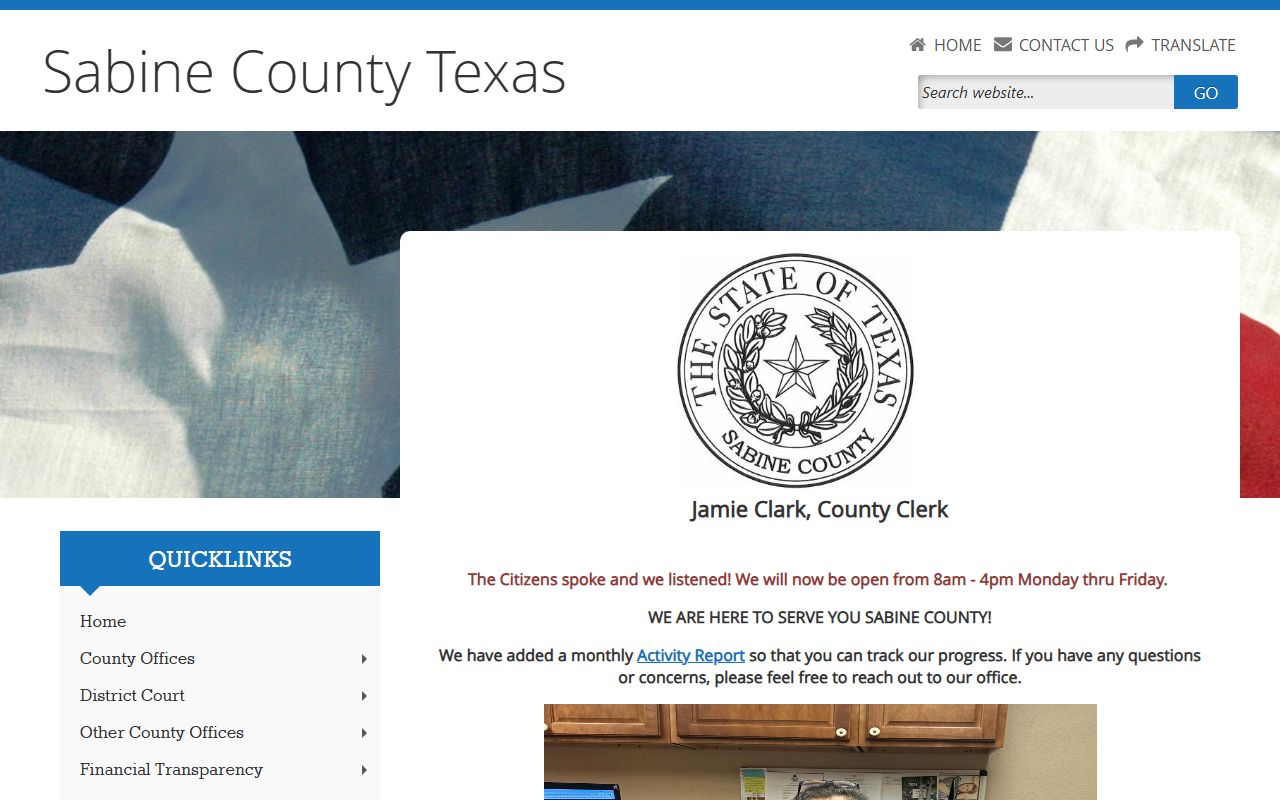
The clerk's website has contact details and guidance on what to bring when you come in to apply or request copies.
Getting a Marriage License in Sabine County
Both people who plan to marry must appear in person at the County Clerk's office. You cannot send someone else in your place. Each person must bring a valid photo ID and provide their Social Security number. Acceptable IDs include a Texas driver's license, state ID card, U.S. passport, or military ID. Expired IDs are generally not accepted.
Under Texas Family Code Chapter 2, a marriage license in Sabine County costs $81.00 for residents. If neither party is a Texas resident, the fee goes up to $181.00. Credit card payments carry a 5% processing fee, so cash may be the better option if you want to avoid that extra charge. There is one way to reduce the standard fee significantly: complete the Twogether in Texas premarital education course. Couples who finish that program and bring the certificate pay around $21.00 instead of $81.00.
Texas law requires a 72-hour waiting period after the license is issued before you can marry. This comes from Texas Family Code Section 2.204. The Twogether certificate waives this wait. A judge can also waive it in limited cases. Once issued, the license is valid for 90 days under Section 2.201. If you do not marry within that window, you need to apply again.
Note: If you were previously divorced, your divorce must have been final for at least 30 days before you can remarry in Texas, unless a court waived that requirement.
Fees and Certified Copies
The standard marriage license fee in Sabine County is $81.00. The out-of-state fee is $181.00. The Twogether in Texas certificate reduces the fee to about $21.00. A 5% processing fee applies to all credit card transactions, so plan accordingly if you intend to pay by card.
Certified copies of marriage records must be ordered from the Sabine County Clerk, not from the state. The Texas Department of State Health Services maintains a statewide index since 1966 and can issue verification letters for $20.00, but it does not issue certified copies. If you need a certified copy for legal purposes like changing your name, updating records, or estate matters, you have to go through the county clerk where the license was originally filed.
You can request copies in person at the clerk's office or by mail. Mail requests should include the full names of both parties, the approximate date of the marriage, a check or money order for the fee, and your return address. Call (409) 787-3786 to confirm current copy fees and what payment methods the office accepts. You can also use VitalChek for some county records in Texas, though availability varies by county.
The Texas Department of State Health Services maintains records since 1966 and can verify a marriage took place, but it cannot provide a certified copy of the license itself.
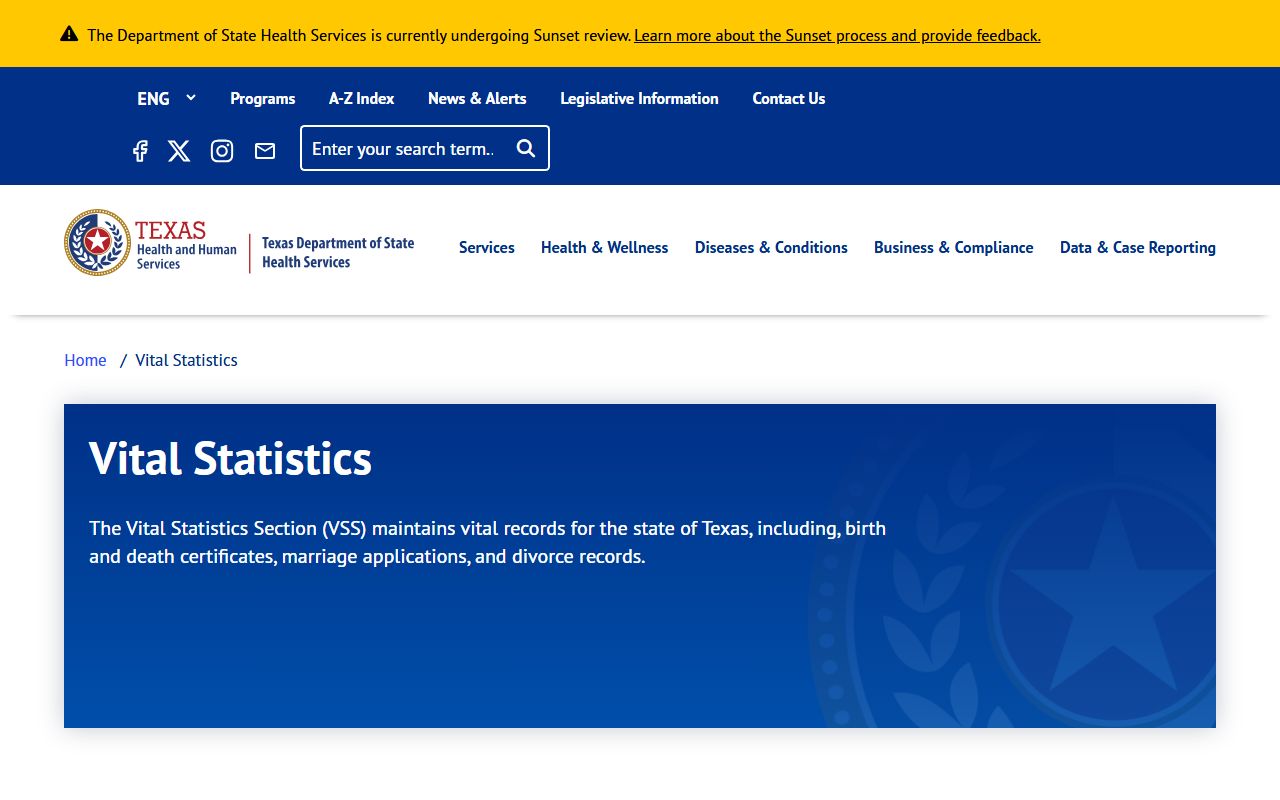
Use the DSHS portal for statewide verification requests; use the Sabine County Clerk for certified copies.
Searching Sabine County Marriage Records
Marriage records in Sabine County go back to 1880. Pre-1875 records were lost in a fire. For records from 1880 forward, the county clerk's office is the main source. You can search by name or by approximate date of marriage. In-person visits allow you to review available records and order copies on the spot.
For older genealogical records, FamilySearch has digitized many Texas county marriage records. Search the FamilySearch catalog for Sabine County to see what collections are available online. The Library of Congress and Texas State Library also hold historical guides for vital records research.
The statewide DSHS vital statistics database covers marriages from 1966 to present. If you know a marriage happened in Texas but are not sure which county, DSHS can help you narrow it down and then direct you to the right county for a certified copy. Call DSHS at (888) 963-7111 for help with statewide searches.
The Sabine County main portal also has general information about the county and its offices.

The county portal links to clerk services and can help you get in touch with the right department for records requests.
Informal Marriage in Sabine County
Texas recognizes informal marriage, also called common law marriage, under Texas Family Code Section 2.401. To establish a formal record of an informal marriage, both parties can sign a Declaration of Informal Marriage at the County Clerk's office. This creates a public record of the relationship.
Three things are required for an informal marriage to be valid under Texas law: both parties must agree to be married, they must live together in Texas as spouses, and they must represent to others that they are married. There is no minimum time period required. The seven-year myth about common law marriage in Texas is not accurate under state law.
Once an informal marriage is established, it has the same legal status as a ceremonial marriage. You must go through a formal divorce to end it. The county clerk can tell you the current fee for filing a Declaration of Informal Marriage and what documents you need to bring.
State Resources for Marriage Records
Beyond the county clerk, a few state resources are useful when searching for Texas marriage records. The Texas Department of State Health Services maintains the statewide index and can confirm whether a marriage was recorded in the state system since 1966. Contact DSHS at (888) 963-7111 or visit dshs.texas.gov/vital-statistics.
The CDC publishes guidance on where to write for vital records in Texas at cdc.gov/nchs/w2w/texas.htm. This page confirms that certified copies must come from the county, not the state. It also provides the mailing address and fee for the state verification service.
For historical research, the Texas State Library and Archives Commission holds records from early statehood and the Republic of Texas era. FamilySearch offers free access to digitized marriage records from many Texas counties. The Texas Family Code Chapter 2 governs all marriage license requirements, waiting periods, and validity rules statewide.
The Texas Health and Safety Code Chapter 194 covers how marriage records are reported to the state and how the statewide index is maintained.
Cities in Sabine County
Sabine County is a rural county in East Texas. Hemphill is the county seat and largest community. No cities in Sabine County meet the qualifying population threshold for individual city pages.
Nearby Counties
Sabine County borders several other East Texas counties. If you are unsure whether your marriage record was filed in Sabine County or a neighboring county, check the address where the license was obtained.