
Find Texas Marriage Records
Texas marriage records are public documents held by county clerks across all 254 counties. If you need to find a marriage license, get a certified copy, or verify that a marriage took place, the county clerk in the county where the license was issued is where you start. The Texas Department of State Health Services also keeps a statewide index of marriages from 1966 to present, though they can only issue verification letters. Certified copies come only from the county level. This guide covers how to search marriage records in Texas, what you need, and where to go.
Texas Marriage Records Overview
Where Texas Marriage Records Are Kept
The County Clerk is the primary keeper of marriage records in Texas. Each of the state's 254 counties has its own clerk who issues licenses, records them, and stores them in the county's official public records. If you need a certified copy of a marriage license, you must go to the county where the license was originally issued. No other office can give you a certified copy.
The Texas Department of State Health Services Vital Statistics Section (VSS) maintains a statewide index of marriages from January 1966 to present. Under Texas Health and Safety Code Chapter 194, the state keeps an alphabetical index under both parties' names. But the law is clear: the state can only furnish verification letters, not certified copies. A verification letter confirms a marriage happened and provides basic facts. It is not a certified copy of the license itself.
The Texas DSHS Vital Statistics Section provides marriage record verifications for events from 1966 forward. You can request a verification online through Texas.gov, by mail using Form VS-142.9, or in person at their Austin office. The fee is $20 per search.
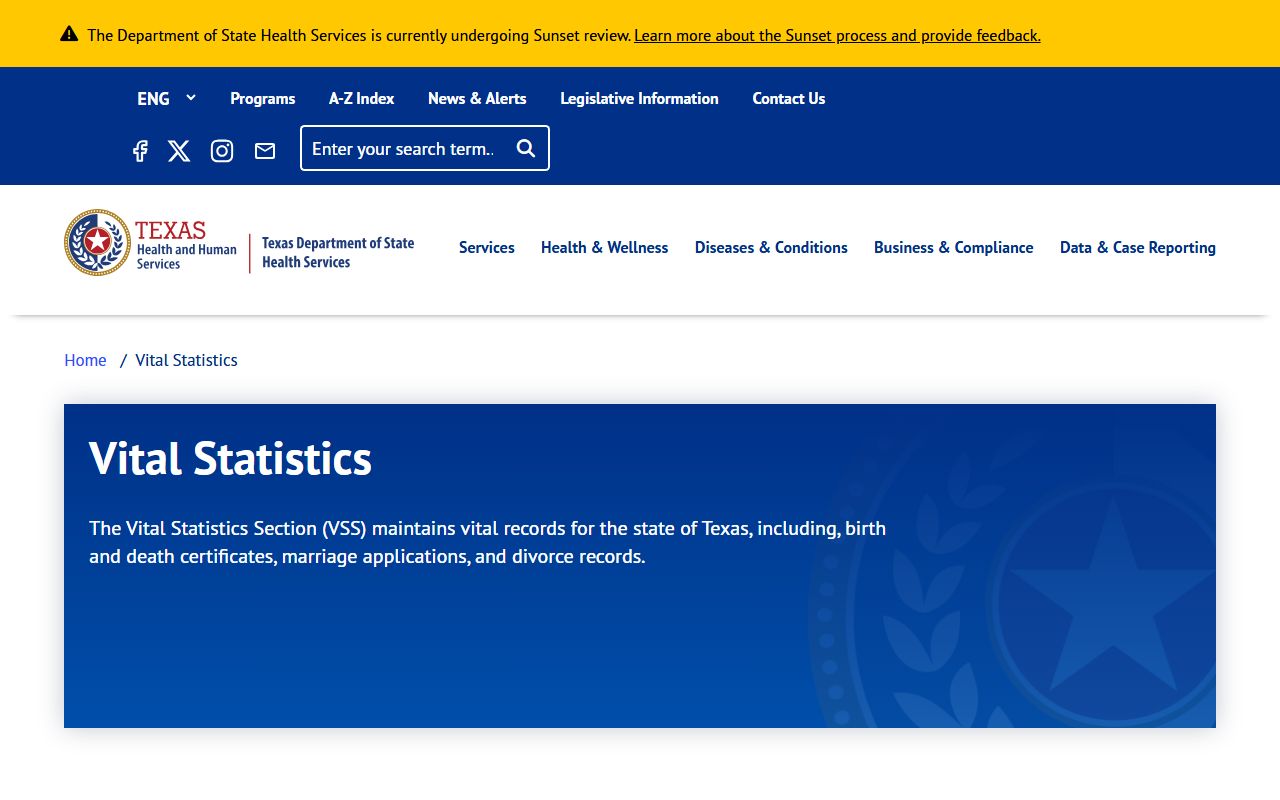
For marriages before 1966, only the county clerk's office where the license was issued holds a record. State-level coverage begins with 1966 filings and runs to the present day.
Note: Certified copies of marriage licenses are only available from the county clerk in the county where the license was issued. The DSHS Vital Statistics Section issues verification letters only, not certified copies.
How to Search Marriage Records in Texas
Texas gives you a few ways to search for marriage records. The county clerk's office is always the place to start. Many counties now offer online search tools, which makes it easier to find records without visiting the courthouse. For state-level verification, you can use the DSHS online system.
The CDC's guide to Texas vital records provides an overview of how to request marriage verifications from the state and what the process looks like for official requests. It outlines the mailing address, fees, and forms required for requests through the DSHS Vital Statistics Section.
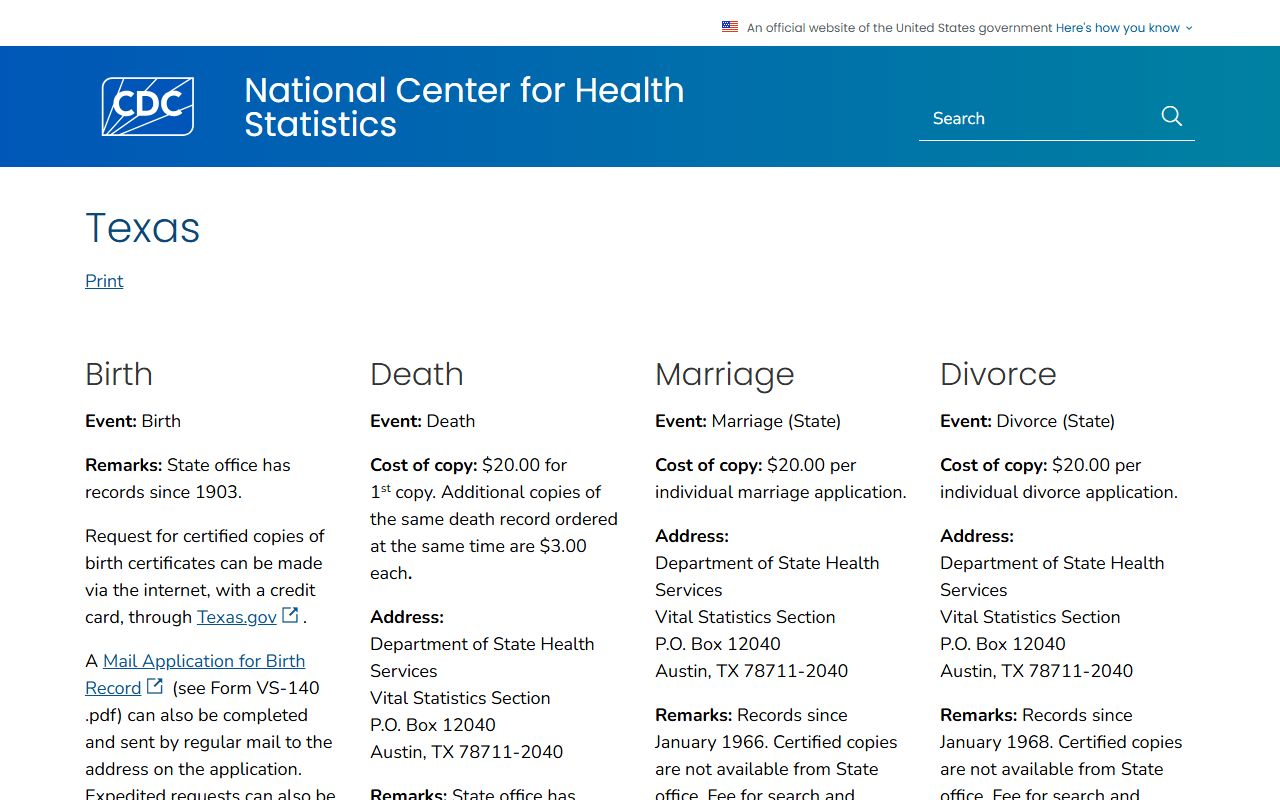
This resource is useful if you are trying to confirm where to send a mail request or want to understand what the state office can and cannot provide before you contact them.
To search at the county level, contact the county clerk in the county where the couple married. Many counties have online portals. You can search by name and date in most systems. Some smaller counties may require an in-person visit or a written mail request. Processing times vary. Walk-in requests at many county clerk offices can be handled the same day. Mail requests may take a week or two.
For online orders, VitalChek is an authorized third-party processor that works directly with many Texas county clerks and the state VSS. They validate your identity electronically and submit your request to the government agency. The document comes directly from the government office with full legal validity. VitalChek processes about 4 million vital documents per year for government agencies across the country.
Texas Marriage License Requirements
Getting a marriage license in Texas is straightforward. Both people must appear together at any county clerk's office in the state. The license is valid statewide once issued, so you do not have to get it in the county where you plan to marry. You can get the license in one county and hold the ceremony in another.
Under Texas Family Code Chapter 2, both applicants must present valid government-issued photo ID and know their Social Security numbers. You do not need to bring a Social Security card, but you must provide the number. Both parties must be 18 or older. A person under 18 may not marry unless a Texas court has granted an order removing their disabilities of minority.
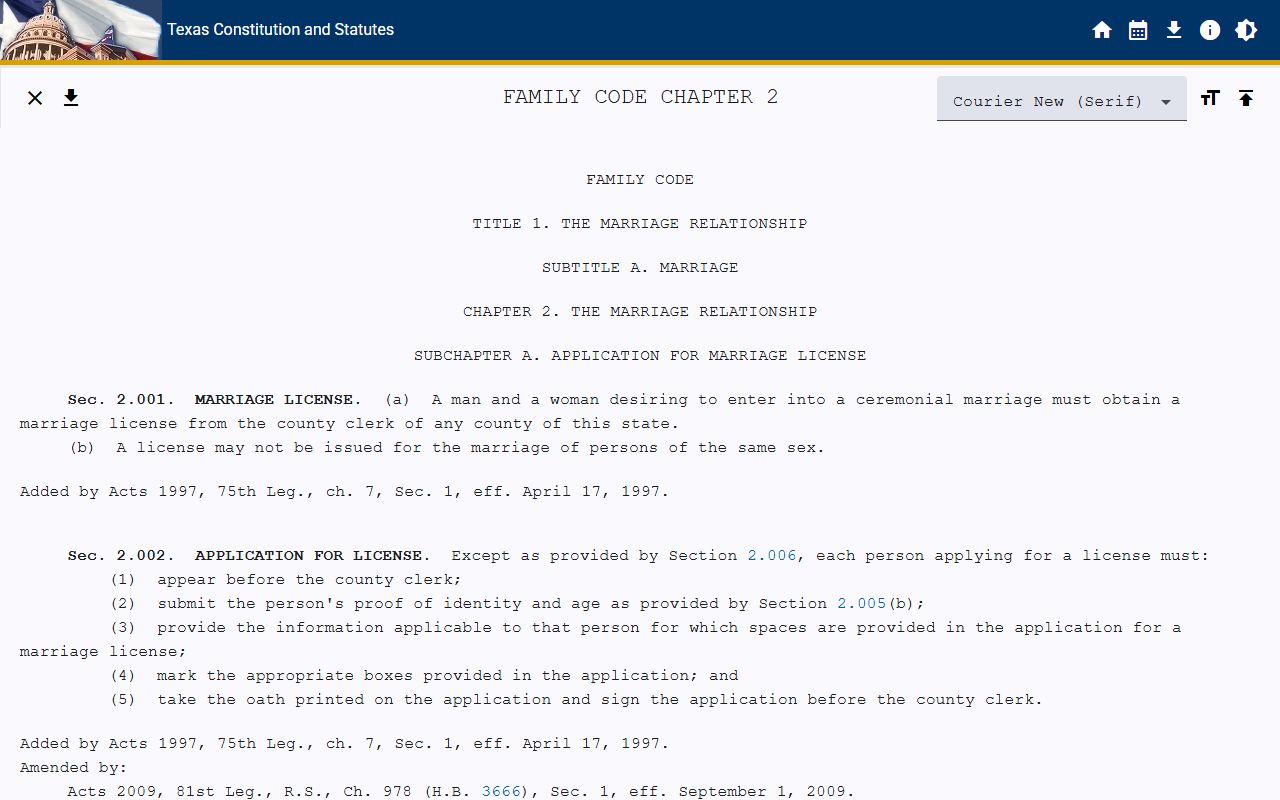
The Family Code governs the full marriage license process, including who may issue licenses, what applicants must provide, and how the license is recorded and transmitted to the state.
License fees vary by county but generally range from $70 to $82. Some counties are higher. Once issued, the license is valid for 90 days. If you do not use it within that time, it expires and you must apply again.
Note: The marriage license you get from any Texas county clerk can be used for a ceremony anywhere in the state. You are not required to marry in the county where you got the license.
The 72-Hour Waiting Period
Texas law requires a 72-hour waiting period between the time a marriage license is issued and when a ceremony can take place. This rule is in Texas Family Code Section 2.204. The wait starts when the clerk issues the license, not when you fill out the online pre-application. It cannot be waived unless you complete an approved premarital education course.
The Twogether in Texas program is the state's official premarital education course. It is free. Completing the course earns you a certificate that does two things: it waives the 72-hour waiting period and cuts your marriage license fee by $60 statewide. In most counties, this brings the cost from around $81 down to around $21. The certificate is valid for one year from completion and must be presented at the county clerk's office when you apply.
You can find Twogether in Texas course providers by visiting twogetherintexas.com. Courses are offered in person throughout Texas and through some online providers. Call 2-1-1 if you need help finding a class near you.
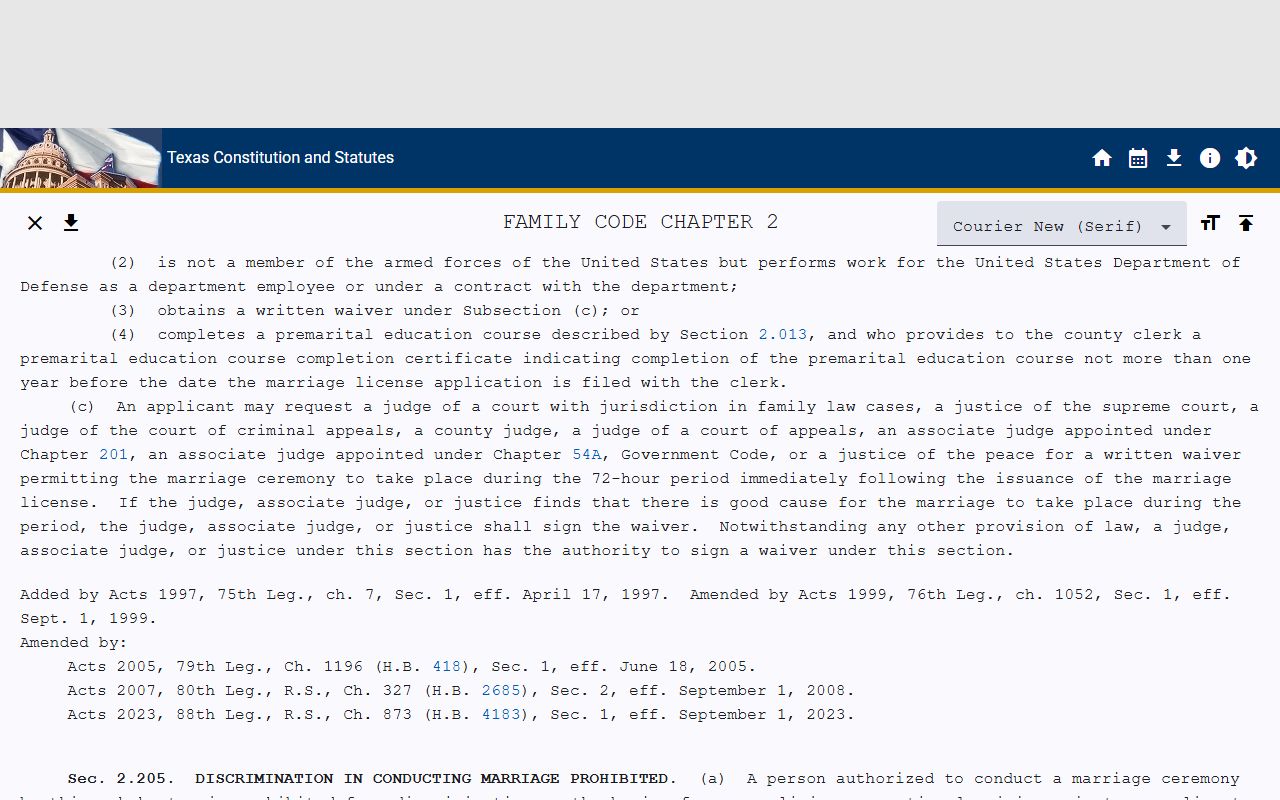
This section of the Family Code defines the marriage license requirement that applies to all ceremonial marriages in Texas, confirming that both parties must obtain a license from a county clerk before the ceremony can take place legally.
Common Law Marriage in Texas
Texas is one of the few states that still recognizes common law marriage, also called informal marriage. Under Texas Family Code Section 2.401, a common law marriage is established when three elements are met: both parties agree to be married, they live together in Texas as spouses, and they represent to others that they are married.
There is no minimum time requirement. Common law marriage can be established in as little as one day if all three elements are genuinely met. The seven-year myth is false. Once established, common law marriage has the exact same legal status as a ceremonial marriage. Community property rules apply. Inheritance rights are the same. A formal divorce is required to end it.
The Texas Health and Safety Code Chapter 194 also requires county clerks to report declarations of informal marriage to the state within 90 days. This means even informal marriages can be indexed at the state level when a Declaration of Informal Marriage is filed.
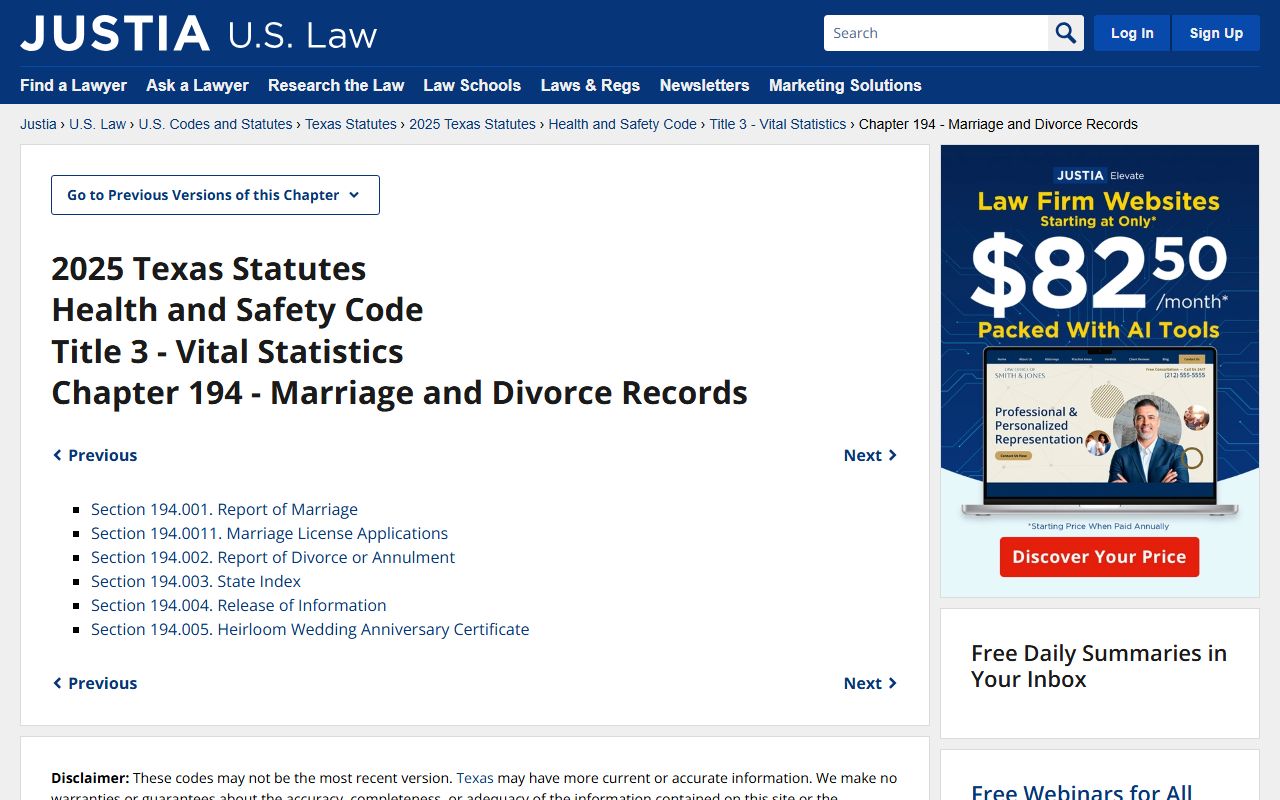
Chapter 194 sets the state-level reporting rules that county clerks must follow when transmitting marriage data to the DSHS Vital Statistics Section, ensuring the statewide index stays current.
If you want to formally register a common law marriage, you can sign a Declaration of Informal Marriage at any county clerk's office in Texas. Under Section 2.402 of the Family Code, this declaration creates an official record and is the easiest way to prove the marriage in court or for legal purposes.
Getting Certified Copies of Marriage Records
To get a certified copy of a Texas marriage license, contact the county clerk in the county where the license was originally issued. You can go in person, call the office, or send a written request by mail. Bring or provide the names of both parties and the approximate date and county of the marriage. The clerk charges a fee per page plus a certification fee. The total is usually $8 to $15 depending on the county.
If you do not know which county holds the record, contact the DSHS Vital Statistics Section first. For $20, they can search their statewide index and tell you which county has the record. You can request this verification by mail using Form VS-142.9, online through Texas.gov, or by phone at (888) 963-7111. Processing times: walk-in at the DSHS Austin office is same day; online orders through Texas.gov take 15 to 20 business days; regular mail takes 6 to 8 weeks.
VitalChek is the authorized online ordering service for Texas vital records. They work directly with government agencies to process and fulfill requests. You submit your order online, they validate your identity, and the government office ships the certified document directly to you with tracking.
VitalChek processes millions of vital record requests each year and is fully authorized by the Texas government to submit orders on behalf of requesters.
Historical Marriage Records in Texas
Texas marriage records at the county level go back to the formation of each county, many dating to the 1800s. The state's 254 counties were formed at different times, so some records are older than others. County clerks hold these historical records locally. For genealogy research, several organizations have compiled and digitized many of these older records.
The Library of Congress Texas Local History and Genealogy guide provides a detailed roadmap for finding historical vital records, including marriage records. It covers what is available at the county level versus the state level, and points to major online genealogy databases including FamilySearch and Ancestry Library Edition.
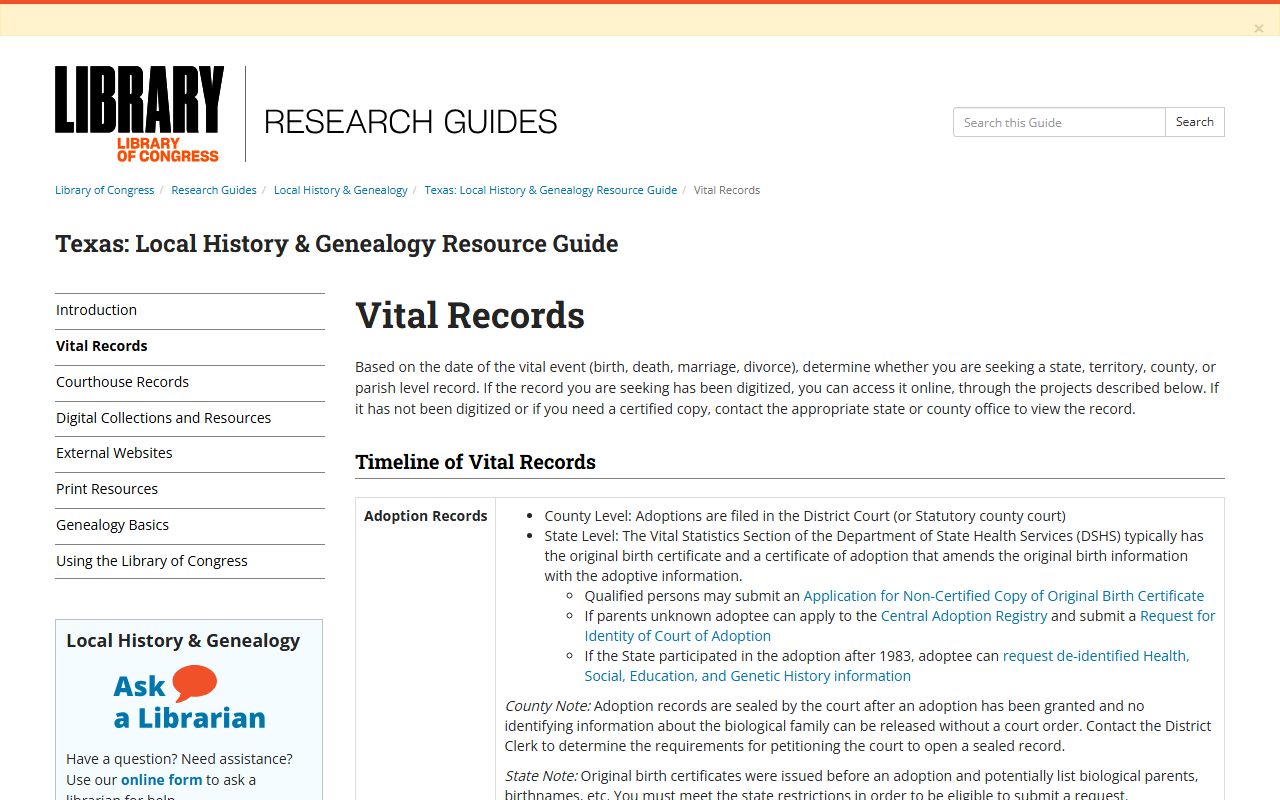
The Library of Congress resource also notes that Daughters of the American Revolution have compiled many early Texas marriage records, available at the DAR Library and through the Family History Library on microfilm.
FamilySearch has digitized microfilms of county courthouse records including marriage licenses and indexes. Access is free with a FamilySearch account. Not all records are indexed, so browsing the catalog for your specific county is often necessary. Some county clerk offices have uploaded older records to online portals as well.
eFile Texas and Related Court Records
Texas courts process name changes, annulments, and declarations of informal marriage through the court system. eFileTexas is the state's official electronic filing system for court documents. If you are filing a petition for name change or annulment, this is the platform you use in most counties.
For related records like annulments or dissolution of common law marriages, the county clerk and the district court both play roles. The county clerk issues and records marriage licenses. The district court handles legal proceedings that affect marital status. Both offices maintain records the public can request.
Browse Texas Marriage Records by County
Each of Texas's 254 counties has its own County Clerk that issues and stores marriage licenses. Pick a county below to find local contact info, fees, and resources for marriage records in that area.
Marriage Records in Major Texas Cities
Residents of major Texas cities get their marriage licenses from the County Clerk in their county. Select a city below to find out which clerk handles marriage records for that area.